


Measuring Otaru with my feet
My first real winter, in a small port town in Hokkaido. A town small enough to measure on foot, a staircase I'm still not sure was meant for people, ice cream at minus six, and why I'm glad to be going back to the equator.
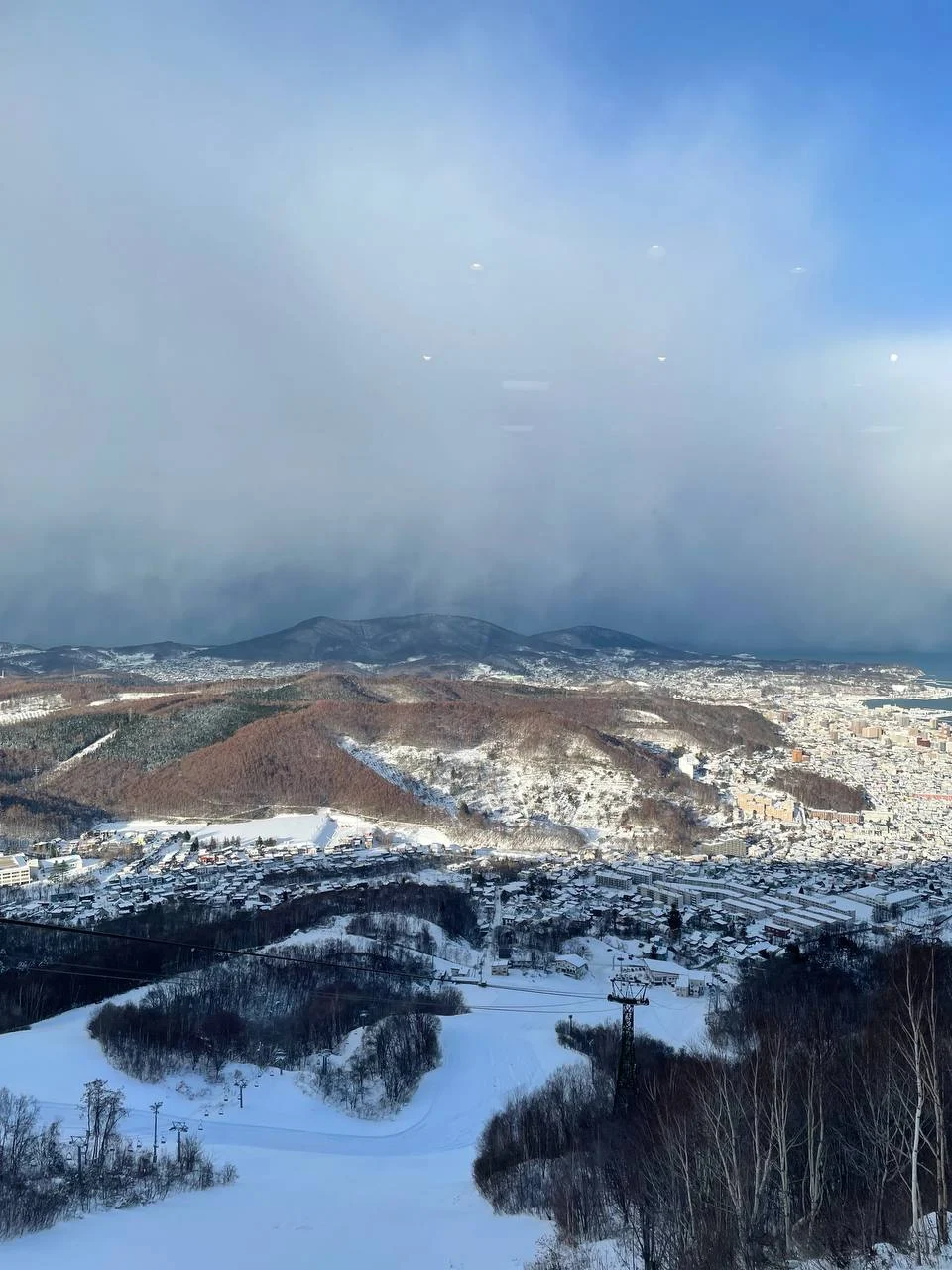
I grew up on the equator. Before this week, snow was something I had seen in films and in other people’s photos, and “winter” was a word for the air-conditioning in a lecture theatre. This December, at the end of the first half of my third year of physics, I took my first trip abroad in years: a week in Tokyo, then north to Hokkaido. This post is about Otaru, a port town on the coast west of Sapporo, which I decided to measure with my own feet.
A town with one bus
Otaru felt very different from Tokyo. In Tokyo everyone walks fast, people rush from one train to the next and every queue at rush hour is long; at the same time the whole city runs on a quiet kind of order, where everyone does their part and nobody crosses a line. Otaru is slow. People walk at half the speed. I hardly saw a school, and as far as I could tell the whole town ran on a single bus.
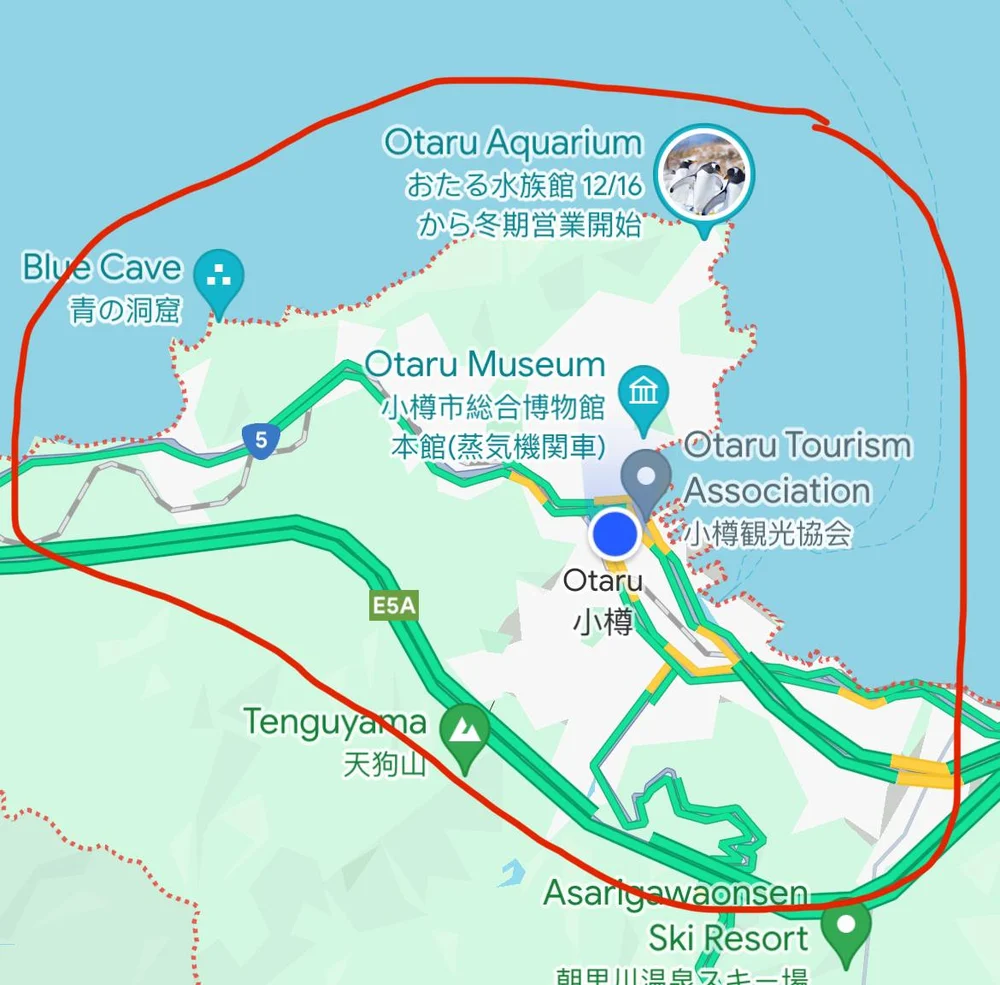
That isn’t true, I found out later: the city’s bus company runs more than twenty numbered routes here [1]. But it is how the town felt, standing at a stop in the snow, and it gave me a question a physicist would ask. How small is a town that one bus is enough for? I could have looked it up: Otaru has about 110,000 people [2], and the old town, from the station down to the canal and along the shopping street, fits in a couple of kilometres. I walked it instead. I walk fast, so I had looped round most of it in half a day, and the answer was: small.
Obstacles
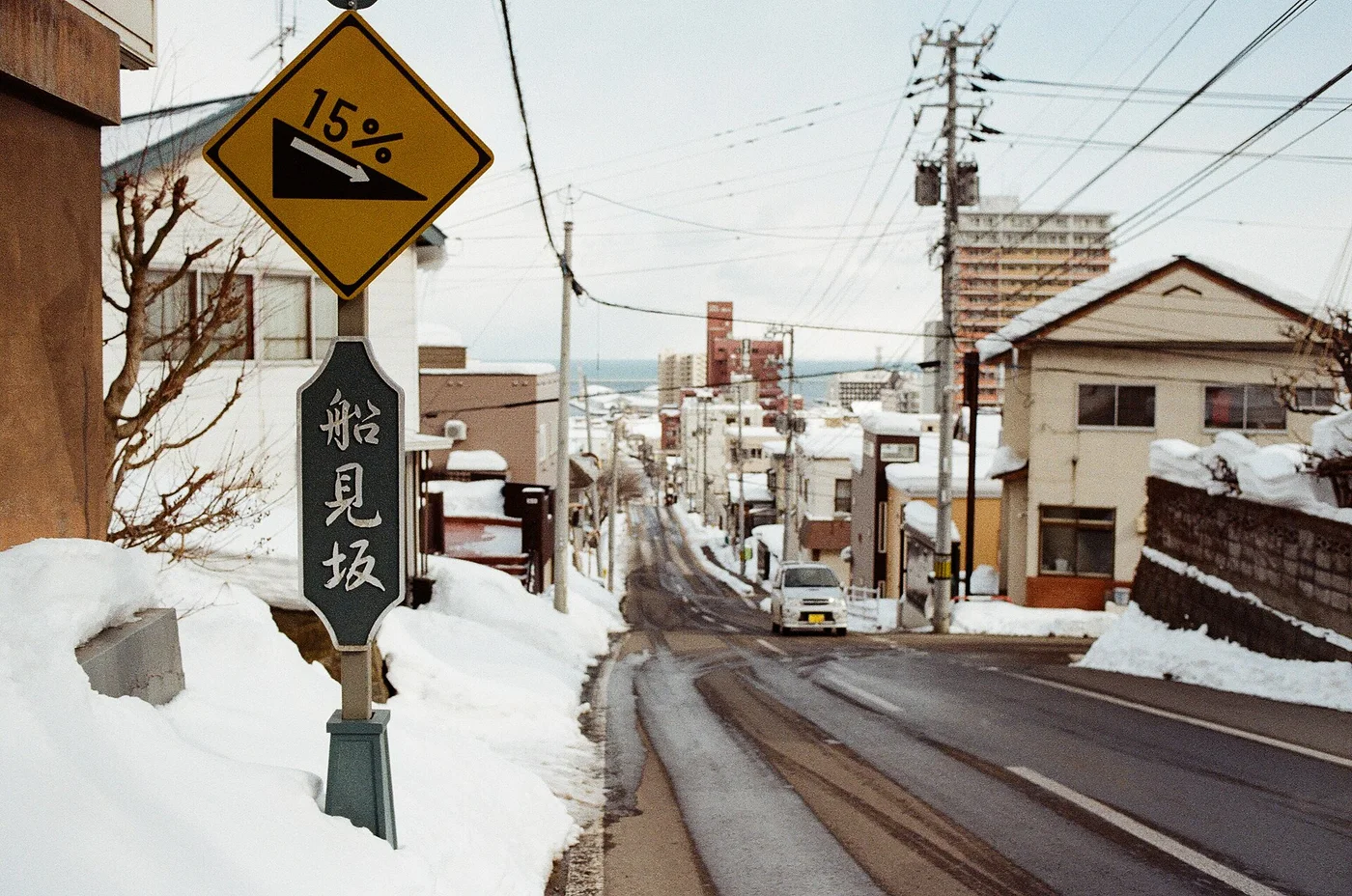
Measuring by foot has its problems. Otaru is built on slopes that run down to the sea, some steep enough to carry warning signs. Halfway round I tried a shortcut and found myself at the top of a slope buried in snow. The way round would have taken thirty minutes, so I did what any equator girl would do: I treated my shoes as skis and slid down. It worked, and I was quite proud of myself.

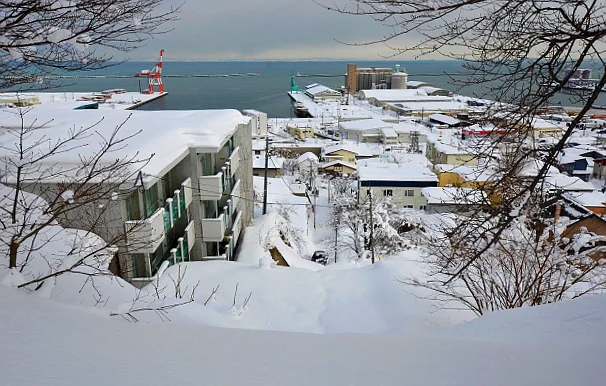
Then there was the shrine. The staircase up the hill to it was so steep and so covered in snow that I stood at the bottom wondering whether it was meant for people at all. I climbed it anyway. At the top there was nowhere to rest: only a shrine with its doors closed, and a stone engraved with Namu Amida Butsu, the Buddhist prayer. When I turned round, the way down looked steeper than forty-five degrees. I said the prayer on the stone to myself and slid down that too. I didn’t fall.

Ice cream below zero
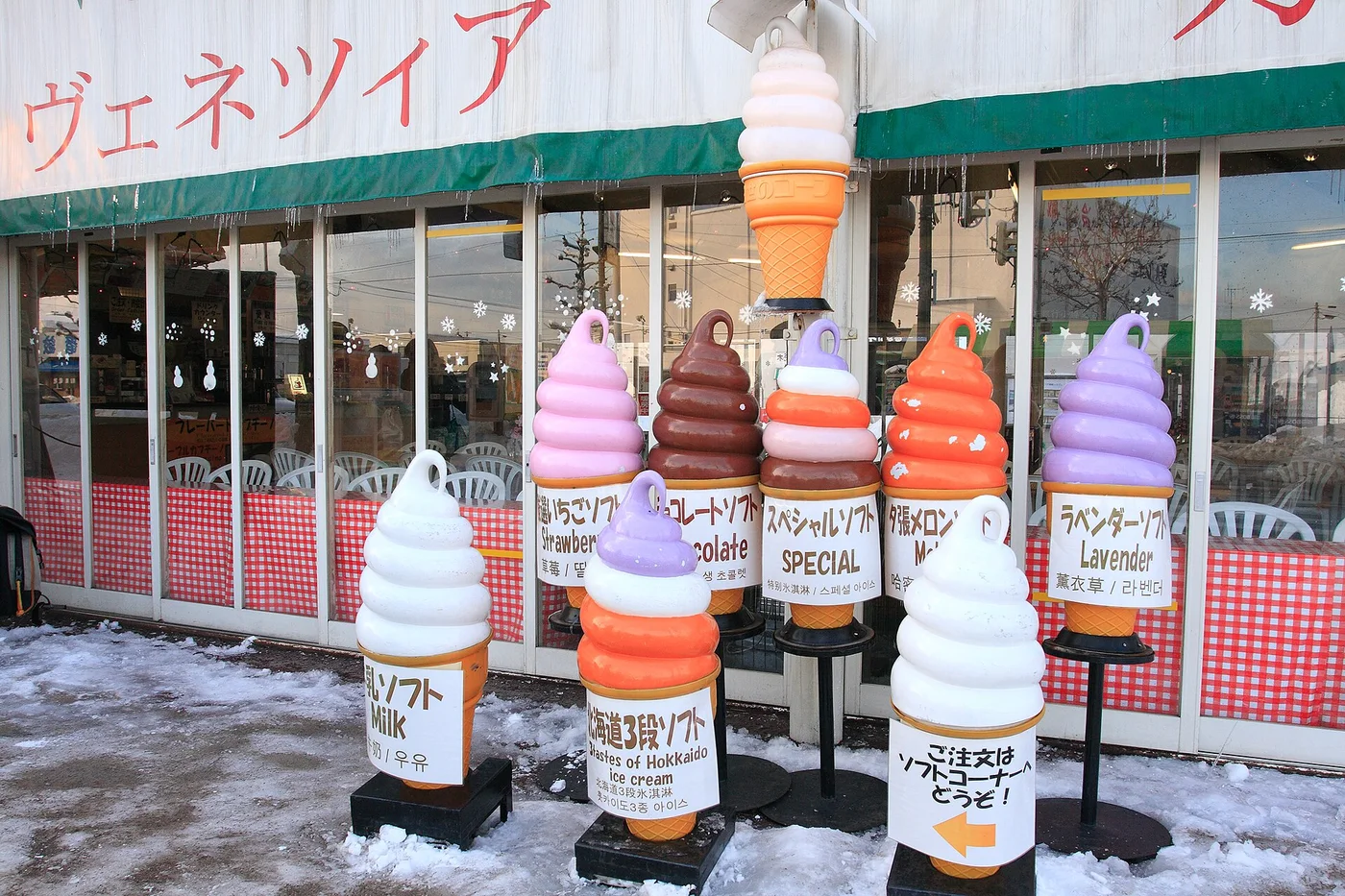
Everywhere I walked, people were eating Hokkaido soft-serve in the cold, so on the way back I bought one as well. It was like eating a frozen stone, and my tongue went numb almost at once. That day the thermometer never climbed above minus five, and the wind off the sea made it feel well below minus ten [3]. The sun on the snow was so bright that I could hardly see. Earlier, I had walked out of the hotel in slippers, a long-sleeved top and cargo trousers, the way I would at home. I lasted about twenty seconds before I went back in, and for a few minutes afterwards I couldn’t think straight.

Bubbling
What surprised me was how warm the town felt. By the second day I was helping a shop owner sweep the snow from outside the shop, interpreting between tourists and the food stalls (I don’t speak Japanese, which made it more fun), and quietly tagging along behind other tour groups to listen to their guides.
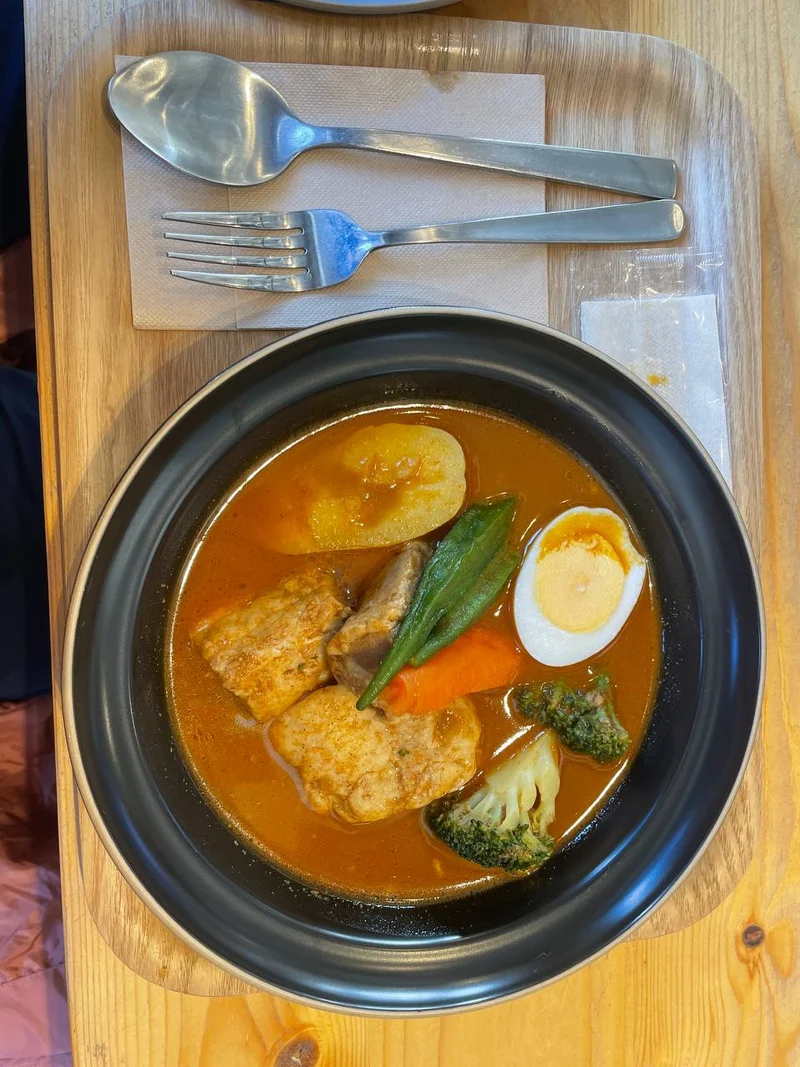
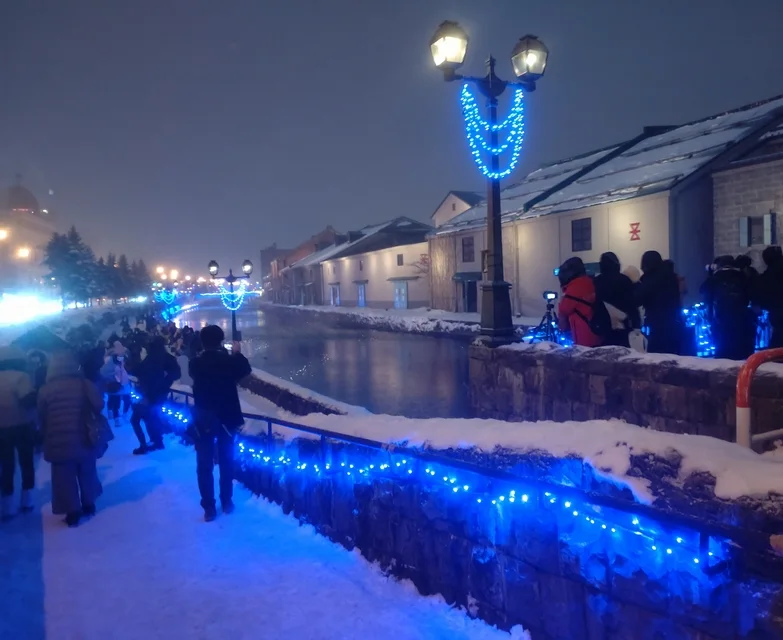
The town rewards it. A century ago Otaru was the financial centre of Hokkaido, and the old banks are still standing: the Bank of Japan’s branch, finished in 1912 and designed by Tatsuno Kingo, the architect of Tokyo Station, is now a museum [4]. The canal was finished on 27 December 1923, so in two days it turns a hundred, and for its centenary year it has been lit blue every night [5]. There are mountains on one side and the sea on the other, and soup curry for when the cold gets too much. I felt like a kettle of boiling water in the middle of winter, bubbling over at everything.

Back to the equator
Winter with snow is lovely. It is beautiful, and it makes the year feel complete. But December in Hokkaido is a strong winter wind, and an equator girl is still from the equator: stay in the wind too long and she gets sick. Today I move on to Sapporo, and after that I fly south.
I have seen real snow now. I’m going back to the equator to carry on into 2024 and 2025 and whatever comes after: studying, working, meeting people and saying goodbye to them. Bye, my little snowman.
Notes
- Hokkaido Chuo Bus. Otaru city routes. chuo-bus.co.jp.
- Otaru: 111,299 people at the 2020 census. Wikipedia.
- Japan Meteorological Agency. Daily observations, Otaru, December 2023: on 23 December, a high of −5.1 °C and a low of −8.2 °C, with a mean wind of 5.3 m/s. data.jma.go.jp.
- Agency for Cultural Affairs, Japan Heritage. Former Bank of Japan Otaru Branch. japan-heritage.bunka.go.jp.
- Otaru City. The history of the Otaru Canal, city.otaru.lg.jp; and the centenary illumination, 16 September to 27 December 2023, city.otaru.lg.jp.